
Explore Whether Matidor Fits Your Operation
Understand what Matidor offers and how teams in similar situations use the platform.

Overview
Different operations have different needs. This page helps you understand whether Matidor's capabilities align with your challenges. Explore common scenarios, review what the platform offers, and choose your next step.
Trusted by Operations Teams Evaluating Their Next Platform


.png)






.png)





Common Scenarios Where Teams Evaluate Matidor
Portfolio Management
Multi-Project Portfolio Management
You manage 30+ field projects across multiple locations, and your team uses spreadsheets or disconnected tools for projects, budgets, and field data. Status meetings consume hours because information lives in different systems.
Teams evaluating Matidor are looking for a unified dashboard to view all projects, gain real-time status visibility, and coordinate geographically. Most teams report time savings on coordination and reporting, with implementation typically taking 4-6 weeks.
Budget Visibility Challenges
Budget Visibility Challenges
Month-end close takes 5-7 days, budget overruns surface after invoices arrive, and your finance and operations teams work from different data sources. You need earlier visibility into spending patterns.
Teams evaluating Matidor want budget tracking with configurable alerts, accounting system integration, and dashboard access for operations managers. Most teams report faster month-end close, and some use Budget and Cost Control as a standalone feature.
Remote Field Operations
Remote Field Operations
Your field teams work at sites with limited or no connectivity, paper forms create delays, and data entry happens twice. You need offline capability that works without cell service.
Teams evaluating Matidor are looking for offline mobile data collection, automatic sync when connected, and GPS-tagged documentation. Most teams report faster data availability and reduced manual entry, with field adoption typically happening within 2-3 weeks.
Exploring Options
Exploring Options
You're researching unified operations software, manage 10-30 projects, and are evaluating whether consolidating tools makes sense for your operation.
Teams in this position want to understand feature sets, compare approaches, and assess implementation requirements. Discovery calls help determine fit, and some teams implement immediately while others revisit when they scale.
Schedule Discovery Call →
Not sure if your scenario matches? See how teams with similar challenges transformed their operations.
Four Core Capabilities
Location Intelligence
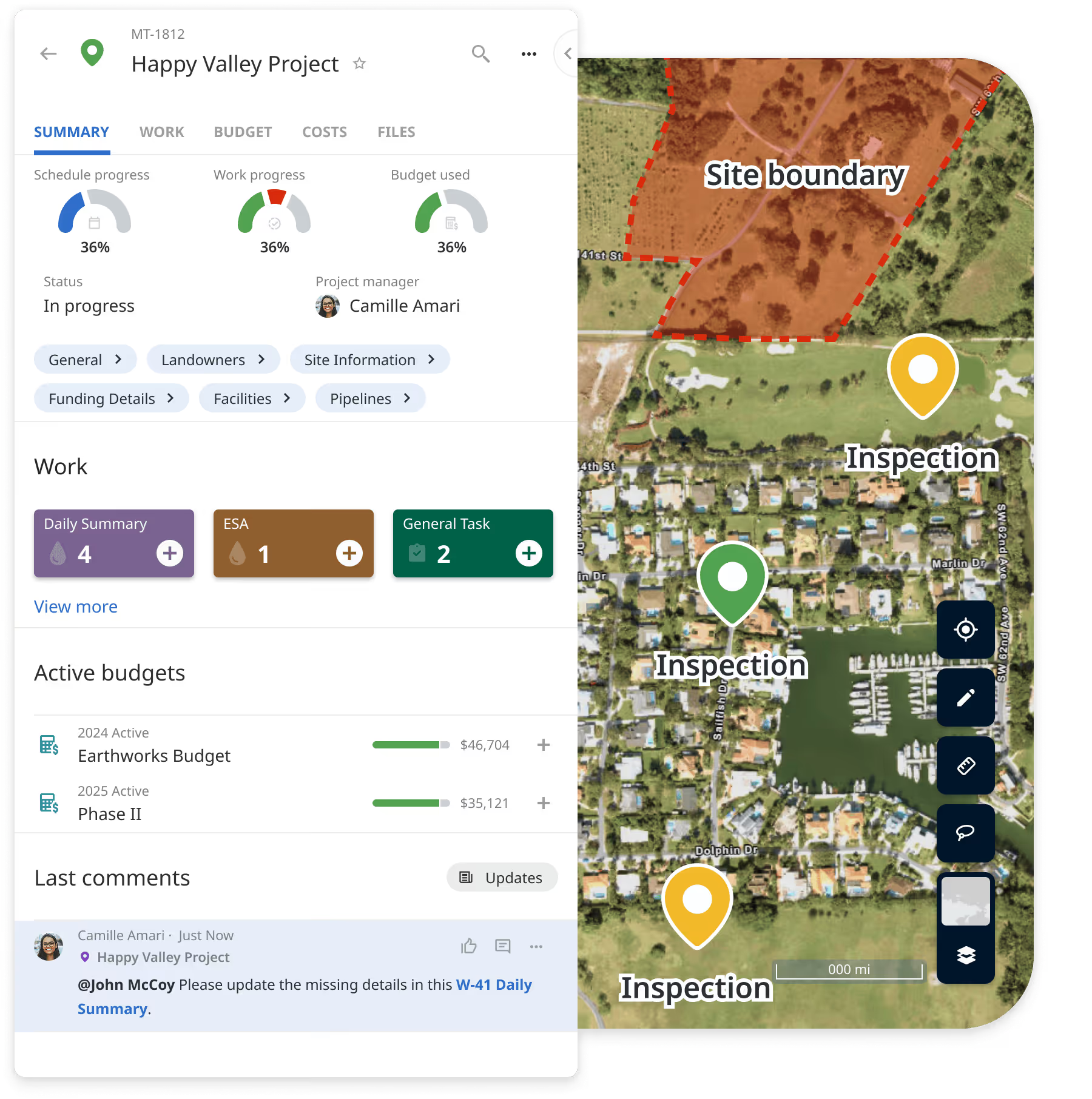
The platform displays projects on interactive maps, layers multiple data types, imports GIS files, visualizes your portfolio geographically, and color-codes by status or other criteria.
What it doesn't do is make resource allocation decisions for you, replace dedicated GIS software for advanced spatial analysis, or automatically optimize crew scheduling.
Common use cases include multi-well program coordination, multi-site remediation portfolio visualization, and regional operations planning.
Unified Project Management
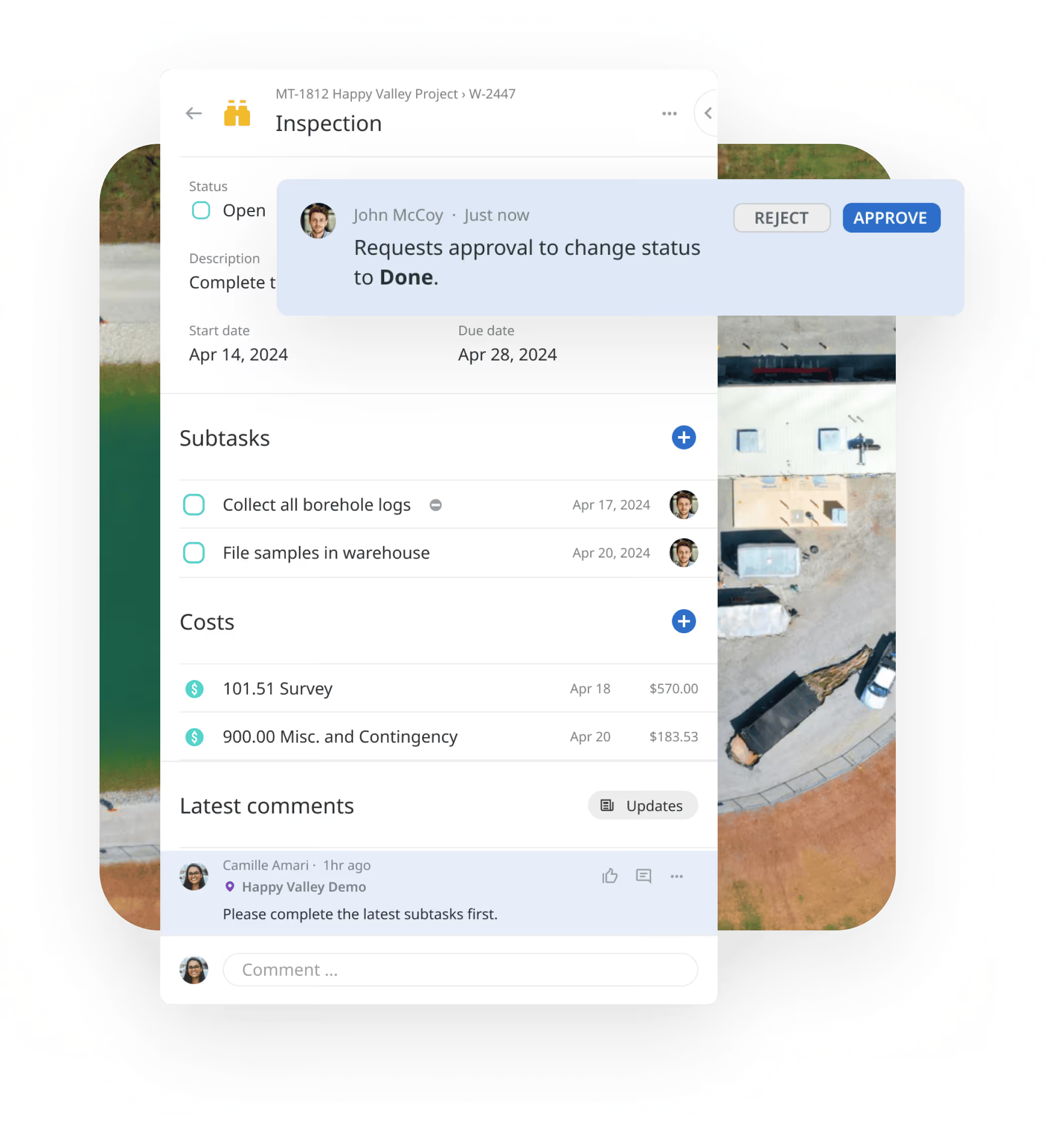
The platform tracks multiple projects on one dashboard, manages tasks and milestones, configures workflows, controls access by role, and generates status reports.
What it doesn't do is eliminate the need for project managers, fix poor project management practices, or automatically prevent project delays.
Common use cases include well abandonment program tracking, environmental assessment coordination, and renewable energy project portfolios.
Real-Time Budget Tracking
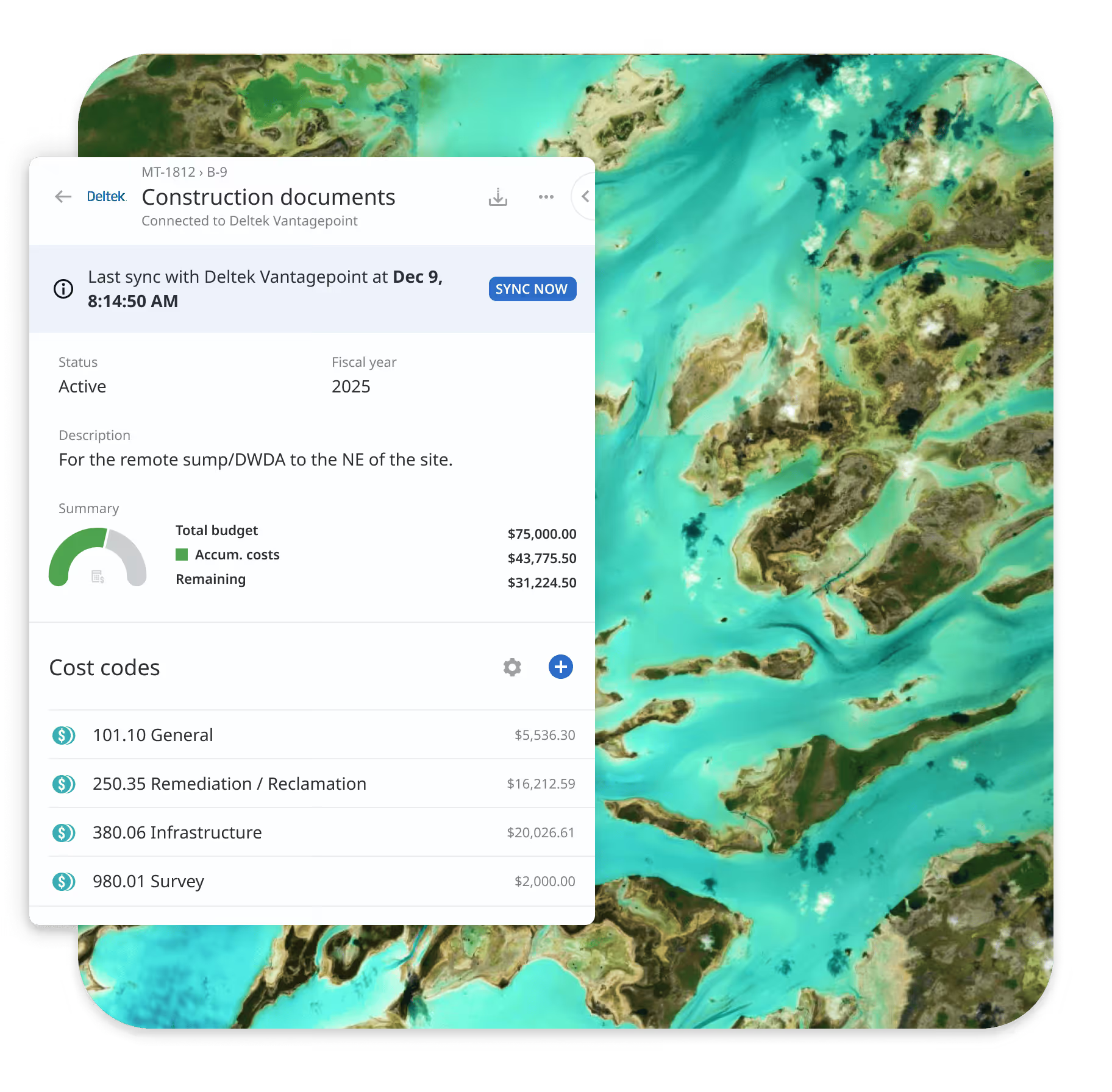
The platform tracks spending against budget allocations, lets you configure alerts at custom thresholds, generates month-end reports, and integrates with accounting systems including QuickBooks, Deltek, Harvest, and Replicon.
What it doesn't do is replace your accounting system, make budget decisions for you, or eliminate the need for financial oversight.
Common use cases include multi-project budget monitoring, AFE tracking for oil and gas operations, and client project budget management for consulting firms.
See how Budget and Cost Control works →
Offline Mobile Field Operations
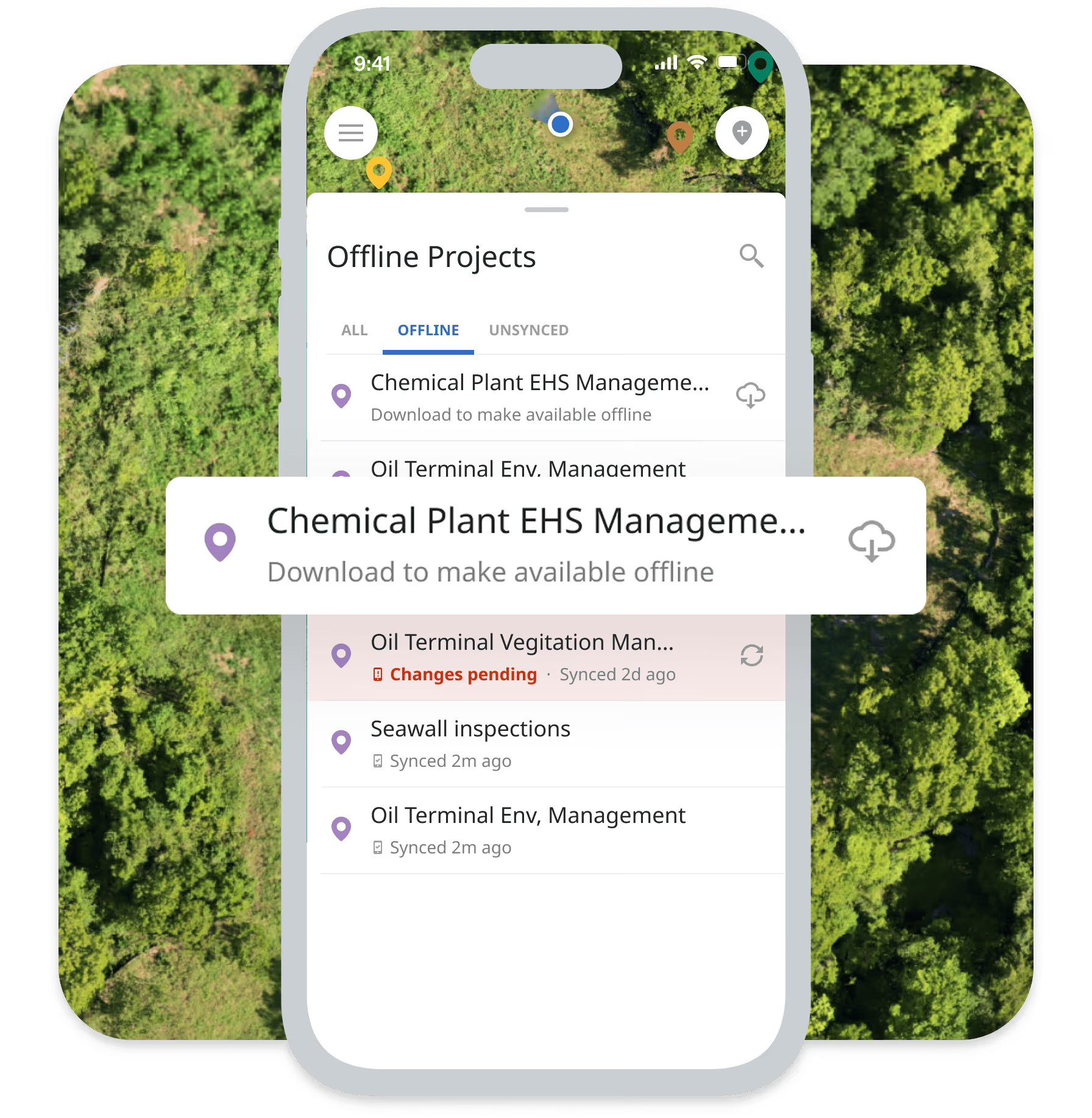
The platform collects data without connectivity, captures GPS-tagged photos, syncs automatically when connected, and creates custom forms for data collection.
What it doesn't do is eliminate the need for field management, work without any device or internet, or automatically improve data quality without proper training.
Common use cases include pipeline inspections in remote corridors, environmental site assessments, and renewable energy facility maintenance.
Choose Your Path Forward

Time Commitment
Your team will invest time as follows:
- An executive sponsor dedicates 4-8 hours over 6 weeks.
- A dedicated onboarding contact commits 20-30 hours on setup.
- Project managers invest 4-8 hours on adoption.
- Field teams spend 1-2 hours on training.
Our team provides a dedicated onboarding manager, technical configuration support, training delivery, and ongoing support access.
Typical Timeline
- Weeks 1-2 focus on discovery and planning, where we map workflows, review your data structure, and define success metrics.
- Weeks 3-4 involve configuration and data preparation, building your environment, migrating historical data, and creating dashboards.
- Week 5 includes training and testing with hands-on practice using realistic data and workflow refinement.
- Weeks 6-8 and beyond cover launch and stabilization, with go-live, close monitoring, and ongoing support.

What Changes
Dashboard access replaces report requests for operations managers. Real-time visibility replaces month-end reports for some use cases. Some processes may require adjustment to align with platform capabilities, and standard templates may replace custom approaches. Implementation requires time investment upfront, and teams report time savings after adoption, though results vary by operation.
What Doesn't Change
Managers still make operational decisions. The platform provides
information, not answers. Teams remain responsible for execution,
and software does not replace management or oversight. Your
accounting system remains your financial system of record, other tools continue to function, and Matidor integrates where applicable.
How Different Industries Use Matidor

Oil and Gas Operations
Teams commonly use Matidor for well abandonment program management, AFE budget tracking, consultant cost monitoring, pipeline integrity coordination, and multi-well portfolio visualization.
Typical configuration includes a project-based structure, budget tracking by AFE, offline mobile for remote sites, and contractor portal access. Implementation typically takes 4-6 weeks, with most teams operational within the first month.
Explore Oil and Gas Solutions →
Environmental Services
Teams commonly use Matidor for Phase I/II/III assessment tracking, remediation project coordination, multi-client portfolio management, compliance documentation, and budget monitoring.
Typical configuration includes phase-based workflows, client portals, GPS-tagged photo documentation, and multi-site dashboards. Implementation typically takes 4-6 weeks, though complexity varies with the number of project phases.
Renewable Energy and Multi-Site Operations
Teams commonly use Matidor for multi-site project coordination, OM budget tracking, equipment utilization monitoring, performance tracking, and maintenance scheduling.
Typical configuration includes a site-based structure, equipment tracking, maintenance workflows, and portfolio dashboards. Implementation typically takes 4-6 weeks, though integration requirements may extend the timeline.
Frequently Asked Questions
Review the scenarios on this page. If your situation matches one or more scenarios, schedule a demo or discovery call. The 14-day free trial lets you test with your actual data, and most teams determine fit within the trial period. Results vary by operation. Some teams see immediate value, others require longer adoption periods. Implementation success depends on team engagement, data quality, and workflow alignment.
No obligation exists during evaluation. The assessment scenarios help identify fit before significant time investment. If Matidor doesn't address your primary challenges, we recommend exploring alternatives. Some operations are better served by specialized tools or different approaches. We prioritize appropriate fit over platform adoption.
Typical evaluation takes 2-3 weeks. Week 1 covers reviewing materials, watching a demo, and discussing with a specialist. Week 2 involves starting your 14-day trial, importing project data, and testing with your team. Week 3 is when you make a decision based on trial experience. Most teams determine fit within the trial period, though extended evaluations are available for complex requirements.
Yes. Many teams start with their primary pain point, typically Budget and Cost Control or Field Operations, then expand after initial adoption. Each feature set functions independently. A phased approach is available. Discuss during your discovery call to design an appropriate rollout for your operation.
Yes, and it's commonly recommended for larger organizations. Start with one project type or geographic region, validate value, refine your approach, and then expand. A typical pilot takes 3-6 months for an initial team, so you can experience the full project cycle benefits. This reduces implementation risk and allows learning to be applied between phases.
This is a common situation. Our process includes data audit and cleanup support. We work with you to understand your data structure, identify issues, and establish a cleanup approach. You provide business rule guidance for how to handle specific data scenarios, and we handle technical cleanup and validation. Most data situations are manageable with proper planning.
Your discovery call addresses this specifically. You explain your workflows, we demonstrate platform capabilities, and you assess alignment. Some workflow adjustment is typically required. Configuration flexibility allows adaptation to various approaches, and the trial period reveals practical workflow fit.
The first 30 days post-launch allow assessment. If the platform clearly doesn't meet your requirements, we discuss options. In practice, most teams continue because value becomes apparent during normal usage. The trial period, before implementation commitment, is designed to identify major misalignment.
Yes. We have detailed case studies showing specific operational challenges, implementation approaches, and measurable results across oil and gas, environmental services, construction, and utilities.
Start with the 14-day free trial, import your current project list and budget data from spreadsheets, build one project template matching your typical workflow, test with a pilot project or team, and compare time spent on status reporting and budget consolidation before and after. Most spreadsheet users see immediate time savings.
Test core workflows that consume the most time today (status reporting, budget tracking, field data collection), involve key stakeholders (project managers, field technicians, finance), assess whether the platform reduces manual work, verify that mobile offline works at your remote sites, and evaluate whether visibility improves compared to current approach.
Quantify current pain points (hours spent on consolidation, budget overrun frequency, compliance issues), demonstrate ROI during trial with pilot project metrics, show real-time dashboards that executives cannot access today, calculate time savings for operations and finance teams, and present implementation timeline and investment clearly.
Yes. The 14-day free trial requires no credit card and no commitment. Test thoroughly with real projects and data. If Matidor doesn't deliver clear value during trial, walk away without obligation. Most teams determine fit within the trial period.
Choose Your Path Forward
Watch a Demo
Schedule a 30-minute demonstration showing how Matidor handles specific workflows and operational scenarios. You'll see platform capabilities, configuration examples, workflow demonstrations, and have time for Q&A.
Start a Free Trial
Get 14 days of full platform access. Import your projects, test with your team, and evaluate using your actual data. You'll have full feature access, support during the trial, no credit card required, and can cancel anytime.
Schedule a Discovery Call
Have a 30-minute conversation about your specific operation, challenges, and whether Matidor merits deeper evaluation. We'll discuss your operational challenges, current tool landscape, implementation considerations, and fit assessment.