.jpg)

Closing a mine is expensive, but smart planning can cut costs and meet regulations. Here’s how mining companies can save money while restoring land responsibly:
- Start Early: Integrate closure planning during mine development to avoid costly surprises later.
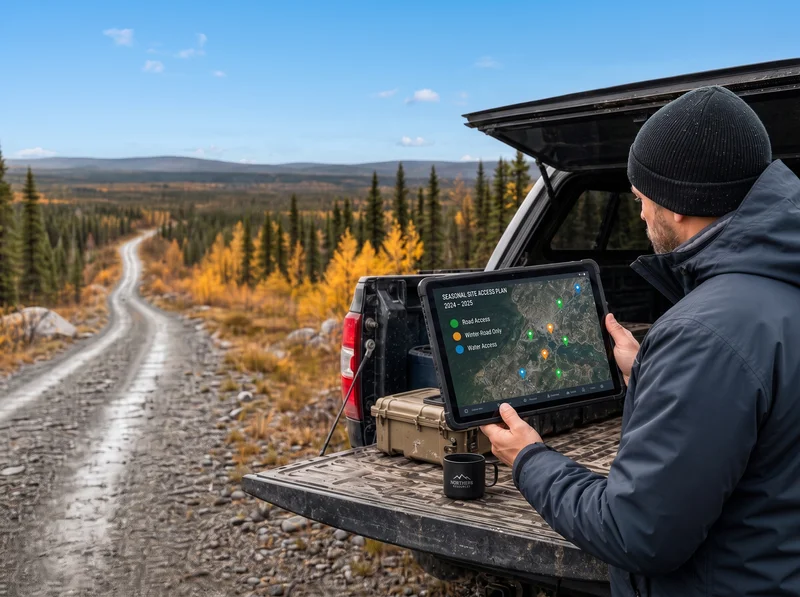
- Use Technology: Tools like GIS and field service software improve mapping, scheduling, and monitoring, saving time and money.
- Progressive Reclamation: Restore land gradually during operations to spread costs and reduce final closure expenses.
- Manage Water & Waste: Closed-loop systems and reprocessing turn liabilities into assets, lowering long-term costs.
- Engage Stakeholders: Clear communication with regulators and communities avoids delays and builds trust.
Smart reclamation isn’t just about meeting rules – it’s about saving money, managing risks, and leaving land in better shape.
Integrated mine closure good practice
Core Elements of Cost-Effective Closure Plans
Closing a mine efficiently requires careful planning centered on three main components: accurate environmental assessments, phased reclamation efforts, and strong regulatory and stakeholder coordination. Let’s break these down.
Baseline Environmental Assessments
Before closure begins, understanding the environmental state of the site is essential. Baseline assessments help estimate costs accurately and ensure compliance with regulations. These evaluations focus on key factors like contamination levels, soil conditions, water quality, and biodiversity impacts – all of which influence the scope and cost of restoration.
Typically, this involves conducting Phase I and Phase II Environmental Site Assessments (ESAs). These assessments identify the type and extent of contamination, helping to shape a clear picture of the site’s needs. Timing is critical here: completing Phase I and II ESAs, along with a Baseline Environmental Assessment (BEA), within 45 days of acquisition and submitting the report within six months is ideal.
Why does this matter? Accurate baseline data allows companies to use probability-based methods for cost estimation, factoring in both financial and environmental risks. This approach reduces the likelihood of unexpected expenses during closure. It’s also crucial to account for climate change risks during this stage – overlooking these factors can lead to billions in additional cleanup costs. Simply put, thorough environmental mapping upfront can save a lot of money down the road.
Progressive Reclamation Methods
Progressive reclamation is all about addressing environmental disturbances as they occur during mining operations. By tackling these issues early, companies can significantly reduce the costs associated with final closure while minimizing long-term environmental damage.
The financial upside of this approach is clear. Reclamation work completed in stages during the mine’s operational life not only spreads out costs but also provides invaluable on-site data that can guide final closure planning. For instance, handling oxidation products during operations can prevent expensive remediation efforts later.
A practical way to implement progressive reclamation is to break closure tasks into smaller, manageable pieces. This phased approach allows companies to release security bonds incrementally as work is completed. For example, rather than assigning a single security value for an entire tailings area, tasks like covering individual tailings cells, re-sloping dams, and constructing spillways can be itemized. This method facilitates phased financial recovery and reduces upfront financial burdens.
Regulatory Compliance and Stakeholder Communication
Beyond technical efforts, staying aligned with regulatory requirements and maintaining open communication with stakeholders are essential for cost-effective mine closures. Proactive coordination with regulators ensures compliance and helps avoid costly delays or revisions that could derail budgets and timelines.
Integrating mine closure planning with Environmental Impact Assessments (EIAs) from the very beginning is another key step. Research shows that when these processes are combined, companies achieve better closure outcomes and a clearer understanding of requirements. By 2010, at least 50 countries had implemented some form of mine closure regulation, highlighting the global importance of compliance.
Financial assurance requirements – such as securities held in trust by regulators – are another critical factor. In Canada, for example, billions of dollars are held as securities for mine closures, and these funds are publicly tracked. Companies can work with regulators to create milestone-based release schedules for these securities, easing financial pressures. A Northern Canada mine serves as a great example: regulators released security funds annually as specific closure milestones were met, allowing the project to fund subsequent phases of closure.
Engaging with stakeholders is equally important. Addressing community concerns early and maintaining transparency through monitoring and reporting systems can build trust while ensuring compliance. Ignoring environmental regulations or failing to communicate effectively can lead to fines and legal liabilities far exceeding the costs of proper planning. Early and consistent engagement ensures a smoother, more cost-effective closure process for everyone involved.
Using GIS-Based Tools for Better Efficiency
Integrating GIS tools into mine closure processes plays a key role in cutting costs and boosting efficiency. By combining location data with advanced analytics, GIS technology simplifies reclamation efforts. It minimizes the need for expensive and time-consuming fieldwork while enhancing accuracy and improving decision-making throughout the entire closure process.
GIS for Site Mapping and Progress Monitoring
GIS technology offers a more comprehensive approach to site mapping compared to traditional surveying methods. By pulling together data from satellite imagery, drones, LiDAR scans, and GPS measurements, mining companies can create detailed visualizations of their sites. These visualizations are crucial for tracking reclamation progress and identifying potential issues early, before they become significant problems.
Real-time data integration takes this a step further, enabling managers to monitor progress continuously and address challenges as they arise .
A great example of GIS in action comes from New Mexico’s Mining and Minerals Division (MMD). The division uses Esri GIS software for tasks like processing permit applications and analyzing economic impacts from mining operations. For the El Segundo coal mining project, MMD gathered 25 square miles of LiDAR data before mining began. This data allowed them to create vegetation density images using first-return LiDAR scans and to model terrain with bare-earth LiDAR data.
GIS helps the Mining and Minerals Division prioritize where it should spend money on surface reclamation projects.
Linda S. DeLay, GISP, MMD
MMD also employs innovative techniques like attaching compact cameras to Trimble UX5 fixed-wing UAVs to capture overlapping orthophotos. These are processed photogrammetrically to produce 3D topographic models, which are then used for stream restoration at historic coal mining sites.
Using Legacy Data and Custom Templates
Incorporating historical mining data into GIS systems provides valuable context for site-specific challenges, cutting down on planning time and improving decision-making. For instance, New Mexico’s MMD uses digital elevation models (DEM) and digital terrain models (DTM) from various time periods – many created by the US Geological Survey – to evaluate reclamation efforts. The division also integrates orthoimagery from federal, state, and local sources, including data from the US Department of Agriculture National Agriculture Imagery Program, to create updated statewide DEMs and DTMs.
Combining legacy data with current information sharpens trend analysis and helps teams make more strategic adjustments. This kind of forecasting is invaluable for improving reclamation strategies.
Matidor enhances this process by offering custom templates that standardize reclamation efforts while addressing the unique needs of each site. These templates can incorporate lessons from past projects, regulatory requirements, and established best practices. Research shows that using geospatial data in mining operations can reduce exploration costs by 10–15%, and similar efficiencies can be achieved in reclamation planning when historical data is effectively utilized.
Another significant advantage of integrating legacy data is the ability to retain institutional knowledge, even as team members change or organizations undergo restructuring. For long-term reclamation projects that can span decades, consistent data management is critical. Standardizing templates and preserving historical data not only reduces planning time but also minimizes errors, ultimately driving down reclamation costs.
Field Service Management Best Practices
Modern field service management, powered by GIS-based tools, has become a game-changer for streamlining mine closure operations. By centralizing communication and automating scheduling, these systems cut down administrative tasks while keeping teams aligned on critical reclamation efforts. They provide real-time project visibility, ensuring smoother coordination and task management, which are essential for large-scale projects like mine closures.
Team Coordination and Task Management
Field service management software consolidates project information, replacing scattered emails and phone calls with real-time updates. Tasks are assigned to the right personnel based on factors like location, priority, and expertise.
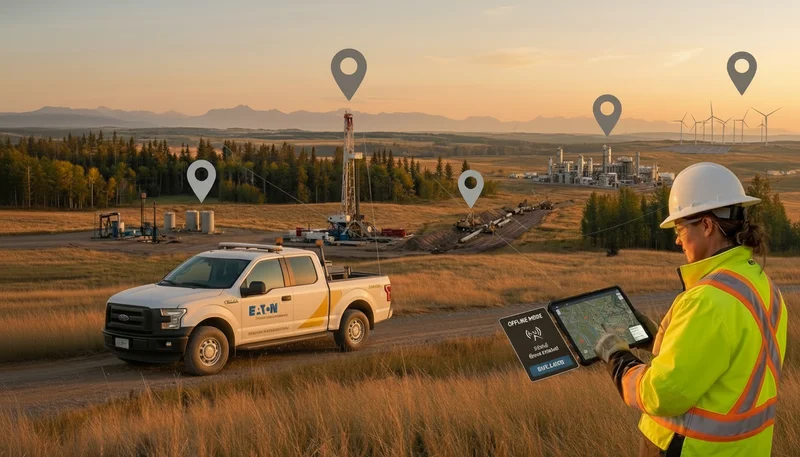
Mobile apps integrated into these platforms give field technicians instant access to work orders, asset details, and task instructions. Workers can update task statuses, review client information, and attach necessary documentation directly from their devices, eliminating the need to return to the office for reporting.
Route optimization features further improve efficiency by calculating the best travel paths, cutting fuel costs, and reducing travel time between sites. For surface mining operations, this can translate into significant savings while ensuring timely attention to high-priority areas.
Cloud-based field management systems not only boost productivity but also enhance communication between field teams and office staff. These tools allow for the creation of flexible, temporary groups based on scheduling and shifting priorities, ensuring resources are allocated effectively. The result? Better coordination and a lighter administrative load.
Cutting Administrative Costs
Administrative tasks often eat up a large chunk of project budgets during mine closures. Field service management tools tackle this problem by automating processes and integrating data, reducing the need for manual labor.
Automated scheduling and dispatching eliminate the hassle of coordinating multiple teams manually. These systems consider resource availability, equipment readiness, and regulatory deadlines, improving team efficiency and utilization by as much as 45%.
Platforms like Matidor combine spatial data with project management, automating tasks like compliance tracking, progress reports, and audit trails. This not only saves hours of work each week but also ensures accurate documentation for regulatory compliance.
Preventive maintenance scheduling is another key feature, reducing equipment downtime by 10–25% through better asset management. By tracking usage, scheduling maintenance based on operating hours, and issuing timely alerts, these tools help avoid costly delays.
Switching to digital forms and automated workflows slashes paperwork by 80%, while teams save between 5 and 11 hours per week by digitizing repetitive tasks like data entry.
With ServiceNow, I know precisely what is going on. We can respond to situations as they occur and get better information more rapidly, and that has a significant impact on our business.
John Perry, Vice President of XDX Service Delivery Technology, Xerox
Field service management software also reduces service and maintenance costs by 12–18% through improved efficiency and transparency. Productivity can jump by up to 50% with these tools, and over 90% of businesses report enhanced security after adopting cloud-based solutions.
Table: Digital vs. Manual Field Management
The contrast between digital and manual approaches becomes especially clear in complex projects like mine closures, where precision and coordination are critical.

Digital systems significantly improve accuracy by reducing errors, redundancies, and inefficiencies. Centralized information keeps teams organized and ensures data is up-to-date, boosting overall productivity. On the flip side, manual processes often lead to errors, delays, and higher costs.
By automating data collection and reporting, digital platforms save time and resources. They offer prebuilt templates for tracking progress, spotting trends, and improving visibility. In contrast, manual methods often operate in silos, making it hard to get a clear picture of real-time job statuses.
McKinsey research shows that inefficient data management and slow decision-making can delay production and supply chain processes by up to 30%. For mine closure projects, where regulatory deadlines are strict, such delays can lead to penalties and extended timelines.
In order for a business to scale, it has to improve efficiencies. Efficiency is a prerequisite for sustainable scaling.
Hendrith Vanlon Smith Jr.
Digital forms simplify data collection and analysis, ensuring better accuracy and compliance. They also integrate seamlessly with business systems, cutting administrative burdens and providing real-time insights for better decision-making.
Methods to Lower Closure and Reclamation Costs
Managing mine closure costs effectively requires a thoughtful balance between meeting environmental regulations and maintaining financial efficiency. The following strategies highlight ways to reduce expenses while ensuring compliance and achieving meaningful environmental outcomes.
Progressive Reclamation and Infrastructure Reuse
Progressive reclamation, a practice of restoring land during mining operations rather than waiting until the end, is widely recognized in the U.S. mining industry as a key method for reducing environmental risks and managing closure costs efficiently. This approach not only minimizes long-term liabilities but also lowers security requirements and shortens their duration. For instance, traditional reclamation achieves a 32% success rate, while Concurrent Mining and Reclamation boasts a 65% success rate.
Lone Star Northwest, operating in Washington state, exemplifies this practice by integrating land preparation, extraction, and reclamation into its mining process. Their seasonal planning ensures vegetation is established in time to prevent erosion, demonstrating how thoughtful execution can yield both environmental and cost benefits.
Some essential components of progressive reclamation include phased cover system construction, revegetation, and optimized mine rock storage design. These measures not only reduce financial security requirements but also enhance environmental outcomes.
Topsoil management is another critical factor in cost control. By removing, stockpiling, and revegetating topsoil during interim periods, erosion can be minimized, and costs associated with material handling and transportation can be significantly reduced. Additionally, designing mine rock facilities to manage gas transport and limit sulfide oxidation can prevent acid rock drainage, cutting down on long-term treatment costs.
When paired with advanced technologies like GIS mapping, these physical reclamation strategies become even more efficient, allowing for better tracking of progress and expenses.
Water and Waste Management Approaches
Water and waste management strategies offer a dual advantage: reducing costs while maintaining high environmental standards. Modern methods, such as closed-loop water systems and waste-to-resource initiatives, are transforming liabilities into assets.
Closed-loop water systems recycle water during ore processing, cutting freshwater usage by up to 80% in some cases. This not only reduces costs but also lessens the environmental impact by minimizing withdrawals from local water sources. By 2025, over 70% of mining companies are expected to adopt sustainable waste management practices, with innovative tailings management potentially reducing environmental impact by up to 40%.
Tailings reprocessing is another cost-effective strategy. While the process costs between $5 and $11 per ton, the recovery of previously unrecovered metals often offsets these expenses, turning waste into a source of revenue. Similarly, dry stacking of tailings, though initially more expensive at $8–$18 per ton, offers long-term savings by lowering the risks of dam failures and reducing ongoing maintenance costs.
An example of innovation in water treatment comes from WSP‘s work in Wales, where they collaborated with Cardiff University to design a sustainable solution for treating polluted mine water. This approach, implemented as part of the Natural Resources Wales program, highlights how tailored water management can protect ecosystems while controlling costs. In Colorado, the North Clear Creek Water Treatment Plant has successfully removed heavy metal contaminants, restoring aquatic habitats and safeguarding water quality.
Waste-to-resource initiatives further demonstrate how mining byproducts can be repurposed. Tailings and waste rock can be converted into construction materials or soil amendments at costs ranging from $3 to $9 per ton, reducing waste volumes while generating additional income.

Bioremediation, which uses microbes, plants, or fungi to detoxify tailings, offers a cost-effective alternative to chemical treatments. At $4–$12 per ton, this method not only reduces environmental liabilities but also lowers overall project costs.
Plant Restoration and Erosion Control
Revegetation plays a crucial role in erosion control and cost reduction. By coordinating topsoil management with appropriate seeding techniques, mining operations can achieve long-term stability while cutting maintenance expenses.
Drummond Coal Company provides a great example of effective reclamation. At its Arkadelphia mine site in Alabama, the company implemented a “stairstep” approach to reclamation, stockpiling and replacing topsoil while establishing a cropping system to harvest viable seeds. Dwight Hicks, the company’s Manager of Permitting and Regulatory Compliance, shared:
Once we would put topsoil on the big acreage–the flatter areas–erosion control would come through quick establishment of vegetation: seeding, fertilizing, and lime application. Then we would come back in and put hay mulch on top of everything.
Soil amendments, guided by soil testing, ensure proper nutrient levels and pH at reasonable costs. For instance, agricultural lime applications typically range from 3 to 5 tons per acre, with higher amounts applied to highly acidic areas. This targeted approach avoids unnecessary expenses while improving soil quality.
Temporary measures, such as seeding with annual species, provide quick ground cover at minimal cost, while permanent vegetation establishes over time. Constructed wetlands add further value by serving as habitats, water treatment systems, and flood control mechanisms. As Richard Davis of the Virginia Department of Mines, Minerals, and Energy notes:
Wetlands provide habitat for lots of wildlife species, they serve to clean the water, [and they] sort of act as flood control.
For rugged terrain, hydroseeding offers an efficient solution, while conventional farming equipment can handle accessible areas. Native plant species often require less maintenance and support local ecosystems, though the choice of vegetation should align with post-mining land use plans and permit requirements.
These strategies demonstrate how thoughtful planning and innovative approaches can significantly reduce closure and reclamation costs while achieving environmental restoration goals. By combining progressive reclamation, advanced water and waste management, and effective erosion control, mining companies can meet regulatory requirements and leave a positive legacy.
Key Points and Final Recommendations
Summary of Cost-Effective Methods
Closing a mine effectively requires balancing regulatory compliance with financial efficiency. By incorporating reclamation efforts throughout the mine’s lifecycle, operators can simplify processes, reduce long-term risks, and minimize liabilities.
The use of GIS (Geographic Information Systems) and field management tools has become increasingly important. For example, the field service management market is projected to grow from $3.2 billion in 2021 to $5.7 billion by 2026, demonstrating the rising reliance on such technologies.
GIS connects data to a map, integrating location data (where things are) with all types of descriptive information (what things are like there). This provides a foundation for mapping and analysis that is used in science and almost every industry. GIS helps users understand patterns, relationships, and geographic context. The benefits include improved communication, efficiency, management, and decision-making.
Esri
When mine closure and reclamation are considered a crucial part of the mine’s core business, many benefits can be seen throughout the mine life cycle. Consequently, this includes better community relations and participation in the closure process, a clear and aligned vision of post-mine closure amongst stakeholders, and more accurate closure cost estimates.
These integrated approaches not only save money during the closure phase but also create a foundation for environmental and community improvements that last far into the future.
Long-Term Benefits of Efficient Reclamation
Over the years, well-planned reclamation efforts can reshape both landscapes and communities. Examples like the Eden Project in Cornwall illustrate how former mine sites can be revitalized into thriving sustainable spaces. Similarly, the Lusatian Lake District in eastern Germany showcases how abandoned mining pits can be transformed into recreational and tourism hubs.
With the help of GIS and real-time monitoring technologies, reclamation projects can evolve into valuable long-term assets. These efforts also play a critical role in environmental restoration by creating carbon sinks, rebuilding wildlife habitats, and addressing hazardous materials that could pose risks to public health. Programs like the Abandoned Mine Land (AML) Reclamation Program, which is funded by fees on active coal production, highlight the industry’s commitment to taking responsibility for environmental impacts.
Incorporating reclamation throughout a mine’s lifecycle also ensures compliance with regulations, reducing the likelihood of fines or legal challenges while maintaining the social license to operate. Modern tools, such as drones for remote sensing, advanced soil treatments, and real-time water monitoring systems, make continuous monitoring and adaptive management more effective.
Restoring these abandoned mine lands is an opportunity to invest in communities that helped power our nation.
The broader impacts of well-managed reclamation extend beyond environmental recovery, fostering stronger communities and sustainable development.
FAQs
Why is it important to plan for mine closure during the early stages of mine development?
Why Early Mine Closure Planning Matters
Starting mine closure planning early in the development process isn’t just a good idea – it’s a smart investment. When closure strategies are baked into the operational plan from the beginning, companies can streamline activities to meet future requirements. This approach avoids expensive redesigns or scrambling to make last-minute changes.
It’s not just about saving money, though. Early planning also makes it easier to engage with stakeholders, manage environmental responsibilities, and set clear goals for the closure process. By thinking ahead, companies can meet environmental standards more efficiently while laying the groundwork for effective land restoration.
How does GIS technology improve the process of surface mine closure and land reclamation?
GIS technology plays a key role in improving how surface mine closures and reclamation projects are managed. With its ability to provide detailed mapping and monitoring, GIS makes it simpler to evaluate land use, observe restoration progress, and meet environmental regulations. By presenting data in a spatial format, it highlights areas that need immediate attention and aids in making well-informed decisions.
On top of that, GIS tools contribute to saving time and cutting costs by streamlining planning and resource management. These tools allow professionals to study terrain, forecast environmental effects, and create sustainable land management plans. The result? Lower costs and better outcomes for the environment.
Why is involving stakeholders important during mine closure and environmental reclamation?
The Importance of Stakeholder Engagement in Mine Closure and Reclamation
Involving stakeholders in the process of mine closure and land reclamation is crucial for achieving well-rounded and effective results. When diverse perspectives are considered, decisions tend to be more informed, balanced, and practical. Open and inclusive communication fosters trust, encourages shared accountability, and addresses the concerns of local communities, ultimately making the entire process smoother and more cooperative.
Collaboration with stakeholders also enables you to identify potential issues early on, ensuring better adherence to environmental regulations and crafting solutions that meet both ecological needs and the priorities of nearby communities. This collaborative approach doesn’t just improve the outcomes of reclamation projects – it also builds stronger, more positive relationships with everyone involved.
.webp)
.webp)
.webp)
.webp)
.webp)
.webp)
.webp)
.webp)
.webp)
.webp)
.webp)
.webp)
.webp)
.webp)
.webp)
.webp)
%20(2).webp)
.webp)
.webp)
.webp)
















.webp)

.webp)


%20(1).webp)




.jpg)

.jpg)
.jpg)
.jpg)


.jpg)