

Orphan wells in Western Canada are no longer a niche environmental topic; they now influence board discussions about capital allocation, regulatory risk, and community trust. In British Columbia, the Orphan Site Restoration Levy has been increased to 24 million dollars per year and will be invoiced annually to oil and gas permit holders starting in 2026. In Alberta, the Orphan Well Association (OWA) and the provincial liability management framework continue to drive higher expectations for credible closure planning and transparent reporting.
This guide covers orphan well liability in BC and Alberta, the 24 million dollar Orphan Site Restoration Levy increase in 2026, and what operators should do now to stay ahead of regulators, communities, and investors.
What is an orphan well and why it matters
In British Columbia and Alberta, a site is considered orphaned when there is no financially viable company left to carry out and fund decommissioning and reclamation work. That can include wells, pipelines, facilities, and associated sites where the former licensee is bankrupt, dissolved, or cannot be located.
Orphan sites carry two categories of risk. Environmentally, they can leak methane, saline water, or other contaminants into air, soil, and groundwater if not properly decommissioned and restored. Financially and socially, the cost of closure falls to industry funded levies and public programs, and communities lose confidence when disturbed land remains unresolved for years.
What is changing in 2026 in BC and Alberta
BC’s 24 million dollar Orphan Site Restoration Levy
In October 2025, the BC Energy Regulator (BCER) approved an increase to the Orphan Site Restoration Levy from 15 million to 24 million dollars to ensure there is enough funding to restore orphan sites. Permit holders were billed 15 million dollars in April 2025 and an additional 9 million dollars in November, bringing the total levy for 2025 to 24 million dollars.
Starting in 2026, BCER has indicated that a 24 million dollar levy for oil and gas permit holders will be invoiced annually, with the amount each company pays calculated using its deemed liability relative to total industry liability. Deemed liability reflects BCER’s estimate of closure costs for a company’s portfolio of wells and facilities and is used to allocate each permittee’s share of the levy.
BCER reports that hundreds of orphan sites across the province require decommissioning and restoration, with significant work planned in the Peace region and other parts of northeastern BC. That growing inventory, along with a multi hundred million dollar cost estimate, is a key driver for the higher levy and faster expected closure timelines. The levy amount is reviewed as part of BCER’s broader Fee, Levy and Security Regulation process, so operators should expect ongoing scrutiny of closure progress and funding needs.
For readers who want to see the regulatory detail, BCER provides more information on its Orphan Sites page and in its bulletin on changes to the Orphan Site Restoration Levy.
Alberta’s orphan liability programs and the OWA
In Alberta, the Orphan Well Association manages the closure of orphaned oil and gas wells, pipelines, facilities, and related sites that no longer have a responsible licensee. The OWA is primarily funded by the annual Orphan Fund Levy, which is charged to oil and gas licensees and set by the Alberta Energy Regulator (AER) in consultation with the association and government.
Recent levies in Alberta have been in the range of more than 100 million dollars per year, yet independent analyses and media reporting note that thousands of wells remain on the OWA’s books and that funding still lags behind the total estimated closure cost. At the same time, Alberta’s Liability Management Framework and AER directives are shifting toward a more proactive assessment of licensee capability and mandatory closure spending targets across the portfolio, not just for orphan sites.
For an overview, see the AER’s information on orphan energy sites and the Government of Alberta’s page on oil and gas liabilities management.
For operators, the takeaway is clear: both BC and Alberta are tightening expectations that companies will actively manage inactive and end of life assets long before they reach orphan status, and that levies will continue to reflect the scale of outstanding liabilities.
Why orphan liability is now a strategic risk
For operators with significant portfolios of mature wells and facilities, orphan related liability is no longer just a compliance line item. It influences capital planning, transaction strategy, stakeholder trust, and the overall risk profile of the business.
Capital planning must now account for sustained spending on decommissioning and reclamation that keeps pace with regulatory expectations and prevents a buildup of inactive or high risk assets. Buyers, lenders, and partners are also placing more weight on liability profiles, closure plans, and historical performance when evaluating deals, which means that inconsistent or poorly documented abandonment programs can directly impact valuations and access to capital.
From a reputation and permitting perspective, regulators and communities increasingly look at whether companies are clearly reducing their inventory of dormant and inactive sites and whether they can demonstrate that closure work is being done to standard, on schedule, and with full documentation. Operators that treat abandonment as a structured, portfolio level program rather than a series of one off projects are better positioned to respond to these pressures and to take advantage of incentives, grants, or funding programs when they are available.
Building a well abandonment program: four pillars
A credible, scalable abandonment and reclamation program usually rests on four core pillars that connect strategy, field work, and reporting.
1. Accurate inventory and risk ranking
You cannot manage what you cannot see. The starting point is a consolidated inventory of all wells and facilities, including their current status (for example, producing, suspended, inactive, dormant, abandoned, or reclaimed) as defined by regulators in your jurisdiction. That inventory should incorporate deemed liability and risk scores from regulators wherever available, along with site specific factors such as proximity to communities, water bodies, or sensitive habitats.
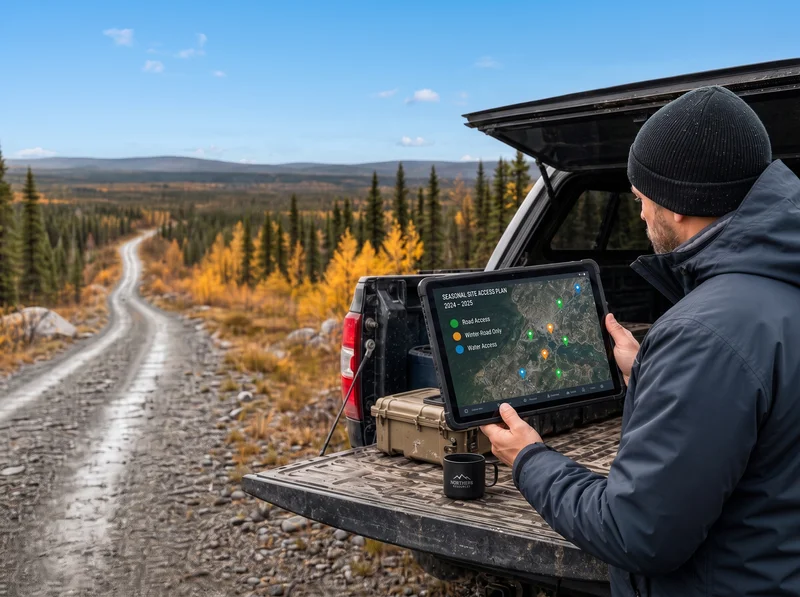
Because orphan risk is inherently spatial, maps are more effective than spreadsheets for spotting patterns. A GIS enabled view that shows wells, facilities, and rights of way on top of regulatory boundaries, land parcels, and environmental layers makes it much easier to identify clusters of higher risk or higher liability sites that should be tackled programmatically.
With Matidor’s field operations platform, operators can see all their sites on a single interactive map, color coded by project status and overlaid with relevant geographic context, which simplifies screening and prioritization of abandonment candidates.
For teams focused on abandonment and decommissioning, Matidor also supports detailed site level inspection and monitoring workflows, as outlined in its abandonment and decommissioning resources.
2. Program level planning instead of one off work orders
Decommissioning one well at a time with isolated work orders is inefficient and makes it difficult to forecast spending against liability reduction targets. Instead, operators can group wells and facilities into programs based on factors such as geographic proximity, similar well designs and anticipated abandonment methods, and shared access or landowner considerations.
Running abandonment work as programs reduces mobilization costs, improves utilization of specialized crews and equipment, and creates a natural structure for portfolio dashboards and executive reporting. With Matidor’s multi site project management, operators can manage dozens of abandonment projects within a single portfolio, track real time status, and identify opportunities to batch work where crews and access overlap.
Matidor’s portfolio dashboards surface project health, schedule, and budget indicators at a glance, which helps teams coordinate programs across regions and avoid overruns that only become visible at month end in traditional reporting. For oil and gas specific examples, see Matidor’s well abandonment and AFE tracking solution.
3. Consistent field execution and documentation
Regulators in both provinces expect operators to maintain detailed records for each step of decommissioning and reclamation, including deactivation, wellbore plugging, equipment removal, contamination assessment, remediation, and revegetation. They want to see time stamped, traceable evidence, not just a final sign off that work is complete.
That makes standardized field forms, checklists, and workflows essential so that internal crews and contractors follow the same process and capture the same data at each site. In practice, that means structured data entry, photos tied to specific locations, logs of activities performed, and lab results or certificates stored alongside the site record rather than scattered across emails and spreadsheets.
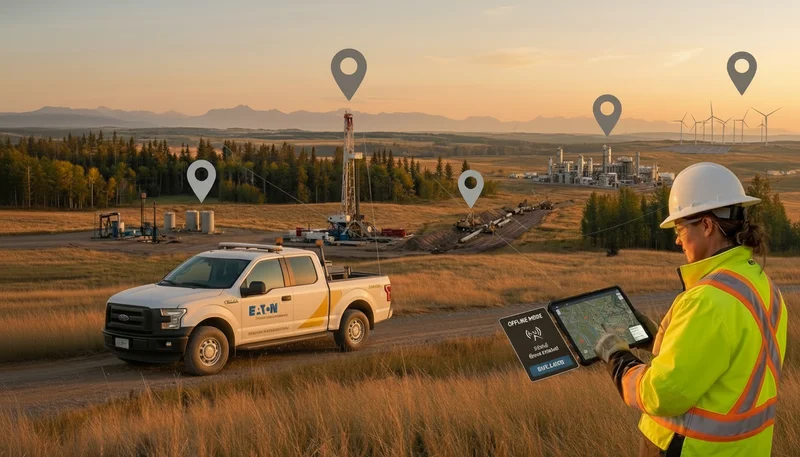
Matidor field operations software gives crews offline capable mobile tools to capture inspections, forms, photos, and notes directly in the field, with updates syncing automatically into a central, GIS linked system of record. This creates an auditable trail of who did what, when, and where, and removes the need to reconcile multiple spreadsheets after the fact.
Many abandonment crews work in remote areas with limited connectivity. Matidor’s approach to offline data sync for field operations ensures that data is captured consistently in the field and synchronized securely once devices reconnect.
4. Transparent reporting against liability and levy contributions
As levies in BC and orphan fund expectations in Alberta rise, boards and regulators want clear evidence that companies are addressing their share of the problem. That starts with tracking individual wells and facilities as they move from active to suspended, inactive, dormant, abandoned, and reclaimed categories, using definitions that align with regulator terminology.
From there, operators can report on year over year liability reduction, closure volumes, and spend per site or per program, making it possible to compare actual progress against internal plans and regulatory expectations. In Alberta, for example, the orphan fund levy and liability programs use formulas that allocate costs based on each licensee’s estimated liability versus total industry liability, which mirrors how BCER allocates its orphan levy in British Columbia.
With Matidor, teams can roll up abandonment projects into portfolio level dashboards that show closure volumes, progress against internal targets, and budgets in one place, which makes it easier to communicate with executives, regulators, and landowners about the pace and cost of liability reduction. The platform’s budget management capabilities give teams real time visibility into spend across projects, with automated alerts when costs approach defined thresholds so that overruns can be addressed before invoices arrive.
How technology and well abandonment software support better outcomes
A modern GIS native field operations platform is central to making well abandonment programs both efficient and defensible. Matidor is designed specifically for organizations that manage dozens or hundreds of field projects at once, including well abandonment, reclamation, and environmental remediation.
Portfolio visibility and prioritization
Matidor brings project management, budget tracking, location intelligence, and field operations into one unified system, replacing disconnected spreadsheets and generic tools. Operators can visualize every well, facility, and associated site on an interactive map, layer in regulatory zones and environmental constraints, and view project status and budget health for each location.
For abandonment programs, this means planners can quickly see which sites are in sensitive areas, which clusters of wells could be bundled into a single program, and where budget and schedule risks are emerging that might affect closure targets. Case studies such as Rife Resources show how replacing spreadsheet based tracking with Matidor increased project management capacity and made it easier to stay ahead of growing abandonment and reclamation workloads.
Real time budget tracking and cost control
Cost control is a major concern for both closure programs and boards that are already managing volatile commodity prices and capital budgets. Matidor’s budget and cost management capabilities give teams real time visibility into spend across projects, with automated alerts when costs approach defined thresholds so that overruns can be addressed before invoices arrive.
For abandonment and reclamation portfolios, this allows operators to compare planned versus actual spend per program, per geographic area, or per well type and to adjust future work plans to stay within overall liability reduction budgets. When paired with AFE tracking and other financial tools, this gives finance and operations teams a shared source of truth about closure spending.
Standardized mobile workflows and audit ready records
Field teams need tools that work reliably in remote areas and that do not add paperwork burden at the end of a long day. Matidor’s offline first mobile apps allow crews to complete standardized checklists, attach GPS tagged photos, and log activities even when connectivity is limited, with data syncing automatically when the device reconnects.
Because site history, documents, and cost data are all linked to the same map based project record, operators can respond to regulator or landowner questions with a complete, time stamped trail of work performed. This level of documentation supports compliance not only with closure obligations but also with broader environmental reporting and ESG commitments that many companies already track across their portfolios. For more detail, see Matidor’s guide on environmental consulting reporting and insights on mitigating the biggest risks in the oil and gas industry.
Next steps for operators in BC and Alberta
If you operate in British Columbia, the move to a 24 million dollar annual Orphan Site Restoration Levy starting in 2026 creates a clear financial incentive to reduce your deemed liability and to demonstrate that you are decommissioning and reclaiming sites in a structured way. If you are active in Alberta, the evolving Liability Management Framework and growing orphan inventory mean that regulators and stakeholders will expect more transparent closure planning and reporting over the next several years.
Now is the time to audit your current abandonment and reclamation workflows, identify where data and documentation are fragmented, and evaluate whether your existing tools can support a portfolio level view of liability and closure progress. Resources such as Matidor’s article on how to manage 50 plus field projects and industry specific solutions for oil and gas and environmental services can help frame that discussion across operations, finance, and ESG teams.
If you are updating your abandonment strategy in light of the new levy and Alberta’s evolving liability programs, download the Well Abandonment Program Checklist from Matidor to benchmark your current inventory, planning, and field documentation. When you are ready to see how a GIS native field operations platform can support your closure program, visit the Matidor evaluation page to explore platform fit for your operation or request a demo with your team.
.webp)
.webp)
.webp)
.webp)
.webp)
.webp)
.webp)
.webp)
.webp)
.webp)
.webp)
.webp)
.webp)
.webp)
.webp)
.webp)
%20(2).webp)
.webp)
.webp)
.webp)
















.webp)

.webp)

.jpg)

%20(1).webp)




.jpg)

.jpg)
.jpg)
.jpg)


.jpg)