
Non-compliance with environmental regulations costs oil and gas companies an average of $14.82M — nearly three times the $5.47M average cost of staying compliant. For operations teams managing wells, remediation sites, or multi-site field programs, that gap is not just a legal risk. It is a strategic one that compounds every quarter decisions are made on incomplete or late data.
This article explains the four most common barriers to accurate environmental reporting, what the EPA currently requires, and how modern field operations tools are helping teams close the gap.
Why is environmental compliance reporting so difficult in oil and gas?
The oil and gas industry operates under one of the most complex regulatory frameworks in North America. Oversight is divided across federal and state agencies, each with specific requirements, deadlines, and formats. At the federal level, the Environmental Protection Agency (EPA) enforces Clean Air Act standards that apply to equipment and activities across all onshore oil and natural gas operations.
The challenge is not just what to report. It is how fast the requirements are changing. In May 2024, the EPA introduced updated New Source Performance Standards (NSPS), establishing stricter methane emissions standards for oil and gas operators. The oil and gas industry is the largest industrial source of methane and smog-forming volatile organic compounds in the United States, which is why regulators continue to tighten the rules.
In 2023, oil and gas operations accounted for approximately 15% of all energy-related greenhouse gas emissions in the U.S. That figure is why regulatory agencies are demanding more granular, more frequent, and more verifiable data from operators at every scale.
What does the EPA actually require operators to report?
Under the Greenhouse Gas Reporting Program (GHGRP), any facility emitting more than 25,000 metric tons of CO2 equivalent per year must submit comprehensive annual emissions reports to the EPA. This threshold is designed to capture major emission sources while reducing the burden on smaller operators.
Required data categories include:
- Emissions inventories from large sources, fuel suppliers, and CO2 injection sites
- Spill logs and waste management records
- Safety meeting logs, inspection records, and incident responses
- Site-specific risk assessments and equipment integrity checks
Beyond routine reporting, companies must also implement real-time monitoring. The EPA's updated NSPS rules require advanced technologies for more frequent leak detection and repair, with stricter monitoring standards that increase the operational cost of non-compliance. Modern data management systems must integrate structured data — like drilling records — with unstructured data such as field photos and seismic images. IoT sensors have become essential for detecting potential violations before they escalate into reportable incidents.
The shift from periodic reporting to continuous monitoring is the defining change in oil and gas environmental compliance today.
What are the most common barriers to accurate environmental reporting?
1. Manual processes and human error
Despite the growing complexity of reporting requirements, 80% of oil and gas companies still rely on legacy systems and spreadsheets to manage their environmental data. These manual workflows increase the likelihood of errors, slow down data retrieval during audits, and create fragmented records across departments. According to industry research, 47% of environmental data professionals only access their data occasionally because it is scattered across disconnected tools and teams.
The downstream effects are significant. Errors in reporting can trigger fines, operational shutdowns, and reputational damage that makes securing new permits far harder.
2. Fragmented data systems
Environmental data in most oil and gas organizations lives in multiple places at once: spreadsheets managed by individual project leads, separate ERP or accounting platforms, email threads with contractors, and PDFs from field crews. When no single system of record exists, identifying compliance gaps early is extremely difficult. By the time a problem is visible in a report, it has often already become a violation.
3. Constant regulatory change
Environmental reporting rules are not static. They shift in response to new technology, new scientific evidence, and changing policy priorities at federal and state levels. Companies operating across multiple jurisdictions face a compounding challenge: federal EPA standards, state-level rules, and local permitting requirements can each impose different data formats, submission deadlines, and monitoring thresholds.
With 40% of industry leaders still relying on subjective judgment for compliance decisions rather than real-time data, the risk of falling behind new requirements grows every year.
4. The cost gap is wider than most operators realize
The financial case for modern compliance tools is straightforward. The average cost of non-compliance sits at $14.82M, compared to $5.47M for companies that invest in structured compliance systems. For smaller operators — who represent over 80% of U.S. oil and gas companies and typically employ fewer than 10 people — the financial exposure from a single compliance failure can be severe.
Non-financial penalties are also escalating. Under the EPA's updated methane standards, fines begin at $900 per metric ton and are scheduled to climb to $1,500 per metric ton as enforcement tightens.
How does GIS-based field operations software improve compliance?
Oil and gas companies are increasingly replacing disconnected spreadsheet workflows with GIS-based field operations platforms that link environmental standards directly to field locations. This geographic approach changes how compliance data is captured, validated, and reported.
The core features that drive compliance improvements include:
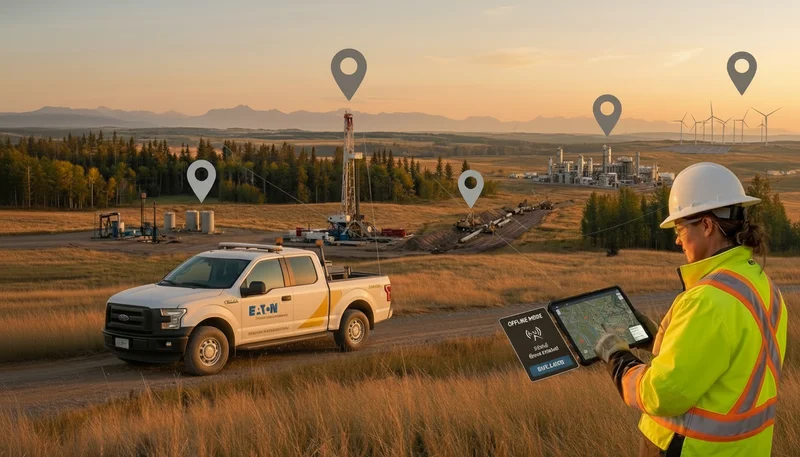
- Real-time project tracking: Environmental monitoring activities are recorded in the field as they happen, eliminating the delays that create audit gaps
- GPS-tagged forms, photos, and timestamps: Every field action is tied to a verifiable location and time, creating an audit trail that satisfies regulators without manual reconstruction
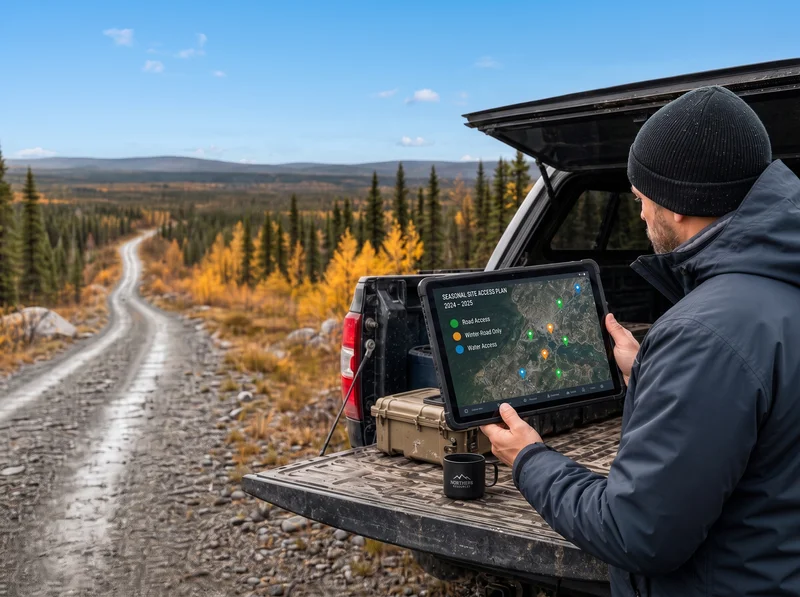
- GIS visualization tools: Compliance boundaries, permits, sampling points, and inspection zones are displayed in a single map interface, making it easy to see where requirements apply and where work has been completed
- Automated workflows: Follow-up tasks trigger automatically based on inspection results, so nothing is missed between field visits and office review
- Customizable templates: Reporting formats can adapt as regulations change, while preserving the historical spatial data regulators may request during audits
The results are measurable. GIS-based platforms have been shown to cut the time foremen spend on compliance tasks from 30% to just 5% of their workday, while reducing monthly reporting time from several days to half a day. Risk response times improve significantly — many issues that previously required days of coordination can now be addressed the same day.
One user from Crystal Clear Testing described the impact during a regulatory audit:
"During an ABSA audit, it was pretty cool seeing the completed PRD inspections on EZ Ops — everything was time and user stamped, which made it very clear inspections were actually being done in the field."
Broader operational savings also follow. GIS-optimized operations can lower fuel consumption by up to 20% and reduce routing costs by up to 15%. The GIS technology market in oil and gas is projected to grow at a 12.5% annual rate, reaching a market value of $26.27 billion by 2030.
How does environmental compliance differ across oil and gas, environmental services, and construction?
The same reporting challenges show up differently depending on the type of field operation:
- Oil and gas operators: The AFE process is typically well-structured, but well abandonment, lease construction, and integrity programs often rely on late field timesheets and fragmented contractor billing. Environmental data from remote sites reaches back-office systems days after it is needed.
- Environmental consulting firms: Phase I and Phase II ESA projects, remediation programs, and field sampling campaigns involve many small daily costs and lab results that can slip through reporting gaps. Tracking regulatory submissions across dozens of active sites simultaneously requires a level of data integration most spreadsheet-based systems cannot provide.
- Construction and utilities: Multi-site work across many subcontractors makes data consolidation slow and error prone. Each vendor may report in a different format, which requires manual harmonization before any compliance report can be submitted.
The underlying pattern across all three sectors is the same: compliance decisions are being made on data that arrived too late to act on.
What best practices help oil and gas teams improve environmental reporting workflows?
1. Shift from periodic to continuous monitoring
Move from month-end compliance reviews to real-time visibility across all active sites. This means logging field environmental data — emissions readings, inspection results, spill events — as they happen, and rolling that data into live compliance dashboards automatically. When supervisors can see compliance status on any given day, they can act before a gap becomes a violation.
2. Connect field data directly to compliance records
Instead of relying on field crews to send spreadsheets or PDFs after the fact, capture data through standardized mobile forms that feed directly into the central compliance system. GPS-tagged photos, digital inspection checklists, and automated cost codes eliminate the manual step that creates errors and delays.
3. Establish automated alert thresholds
Introduce rule-based alerts so the system flags compliance risks before human review is needed. This can include:
- Notifications when an inspection due date is approaching
- Flags when emissions readings approach reportable thresholds
- Automatic triggers for follow-up actions after a failed inspection
4. Standardize reporting formats across contractors
Create one consistent format for all contractors, consultants, and field crews to submit environmental data. Whether through a shared mobile interface or a standardized import template, the goal is to eliminate the dozens of local formats that require manual harmonization before any external report can be filed.
5. Close the loop with post-project reviews
After every major compliance period or project campaign, compare submitted reports against field actuals by category. Document where gaps occurred, update data collection protocols, and revise your estimating assumptions for the next cycle. Over time, this turns environmental compliance from a reactive scramble into a structured, repeatable system.
Where should you start if environmental reporting is already a problem?
If you already know that reporting gaps, late submissions, or data fragmentation are creating risk in your operations, the fastest path forward is to pick one high-exposure portfolio — well abandonment, remediation projects, or multi-site ESA work — and pilot a new data capture approach there first.
Standardize how field data is collected, connect that data to your live compliance records, and introduce simple alert thresholds before rolling the same approach out more broadly. The goal is not a full-system overhaul on day one. It is shortening the distance between when an environmental event occurs in the field and when the right person has the information to act on it.
Platforms built for GIS-based field project tracking make it easier to spot geographic compliance clusters early, respond faster, and produce the kind of auditable records regulators expect. Explore how Matidor supports real-time environmental compliance tracking across oil and gas, environmental services, and construction portfolios.
Frequently Asked Questions
What are the EPA's current greenhouse gas reporting requirements for oil and gas companies?
Under the Greenhouse Gas Reporting Program (GHGRP), any facility emitting more than 25,000 metric tons of CO2 equivalent per year must submit comprehensive annual emissions reports to the EPA. The GHGRP covers petroleum and natural gas systems and is designed to capture data on the largest man-made emission sources in the U.S. Companies must track emissions inventories, spill logs, waste management records, inspection logs, and equipment integrity data. Updated NSPS rules effective May 2024 added stricter methane monitoring and reporting requirements for both new and modified sources.
What happens if an oil and gas company fails to comply with EPA environmental reporting rules?
Non-compliance costs average $14.82M, nearly three times the $5.47M average cost of staying compliant. Under the EPA's updated methane rules, fines start at $900 per metric ton and are set to increase to $1,500 per metric ton. Companies also face enforcement actions, court-ordered penalties, and potential operational shutdowns. Beyond financial penalties, non-compliance damages relationships with regulators, erodes stakeholder trust, and can restrict access to new permits and future business opportunities.
How does GIS-based software reduce environmental compliance errors in oil and gas?
GIS-based field operations software replaces manual data entry with real-time, location-tagged field capture. GPS-tagged forms, photos, and timestamps create a verifiable audit trail without manual reconstruction. Automated workflows trigger follow-up actions based on inspection results, reducing the chance of missed steps. Research shows that GIS tools can reduce the time foremen spend on compliance tasks from 30% to just 5%, and cut monthly reporting time from several days to half a day. These tools also reduce compliance task volume by up to 25% and improve data accuracy across the board.
Why do smaller oil and gas operators struggle more with environmental reporting?
Smaller operators — representing over 80% of U.S. oil and gas companies and typically employing fewer than 10 people — face the same regulatory requirements as large producers but with far fewer dedicated compliance resources. Manual processes and spreadsheet-based data management are common, which increases the risk of errors, delays audit readiness, and makes it harder to respond quickly to regulatory changes. Investing in modern data management systems helps smaller operators reduce errors, strengthen compliance outcomes, and compete more effectively in a regulatory environment that continues to tighten.
What data does the EPA require for oil and gas environmental reporting?
Key data categories under the GHGRP and NSPS rules include emissions inventories from all major sources, spill logs, waste management records, safety meeting documentation, inspection records, incident response logs, site-specific risk assessments, and equipment integrity check histories. Under updated standards, companies must also deploy advanced monitoring technologies for more frequent leak detection and repair, and demonstrate ongoing compliance through real-time IoT sensor data.
Explore how Matidor helps oil and gas and environmental services teams manage real-time compliance data, automate field reporting, and meet EPA requirements with less manual effort.
.webp)
.webp)
.webp)
.webp)
.webp)
.webp)
.webp)
.webp)
.webp)
.webp)
.webp)
.webp)
.webp)
.webp)
.webp)
.webp)
%20(2).webp)
.webp)
.webp)
.webp)

















.webp)

.webp)

.jpg)

%20(1).webp)




.jpg)
.jpg)
.jpg)
.jpg)


.jpg)