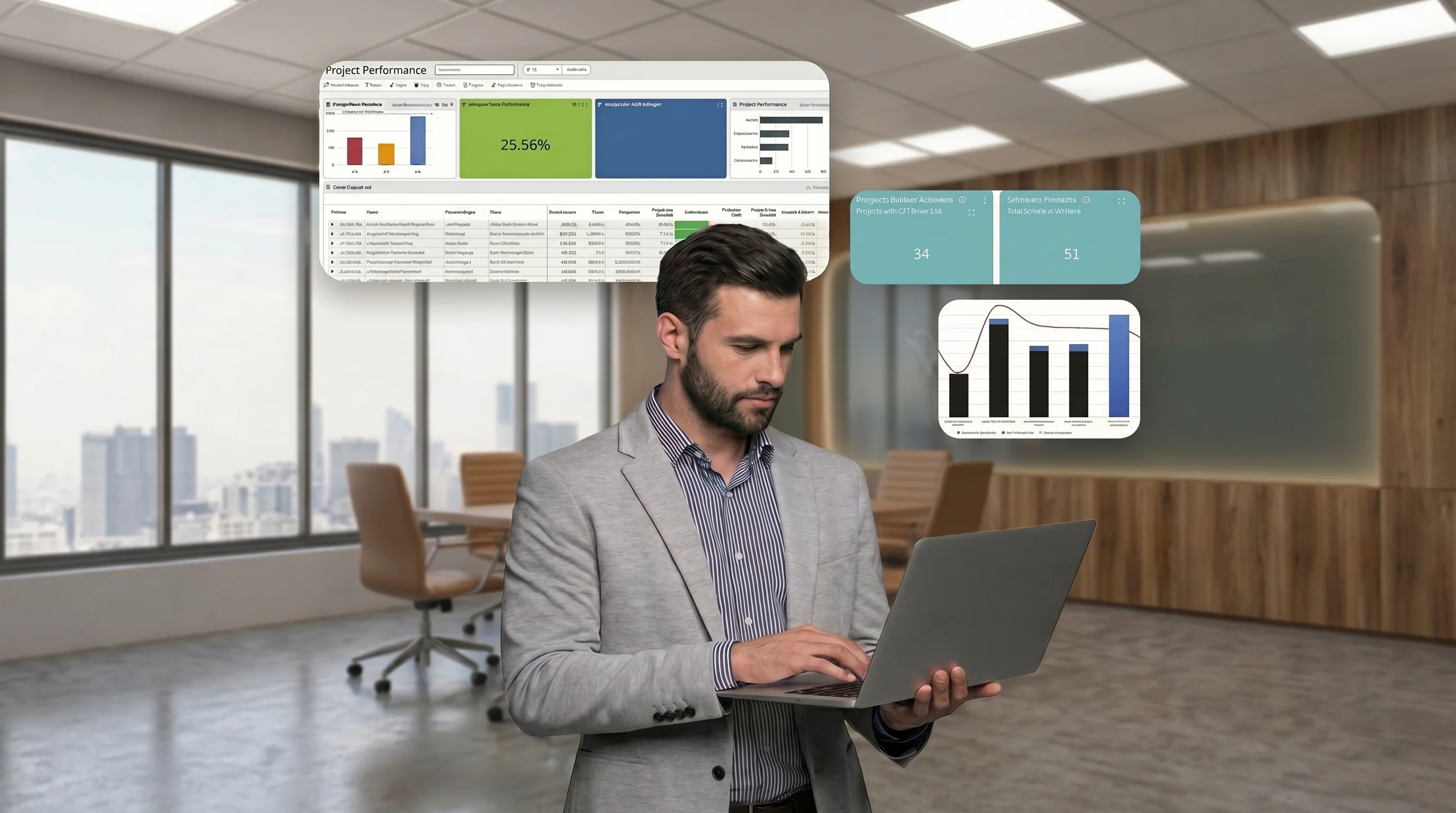

The Gap No One Talks About in Professional Services
Deltek Vantagepoint is the project accounting standard for architecture, engineering, and environmental consulting firms. It handles billing, resource planning, time and expense tracking, and financials with precision. For everything that happens at a desk, it works exactly as designed.
The problem starts when the work moves into the field.
Field crews log data on paper or in disconnected spreadsheets. Project managers send emails to chase site updates. Budget actuals from remote locations arrive at month-end, days after the decisions that could have changed the outcome were already made. Third-party costs and flow-through expenses sit outside Vantagepoint entirely, creating blind spots no report can fix.
This is not a Vantagepoint problem. It was never designed for field operations. The gap between what an ERP does well and what field work actually requires has always been filled with manual effort, workarounds, and the quiet hope that nothing slips through.
What Field Operations Actually Requires
Environmental consulting firms, A&E practices with site work, and oil and gas operators running multi-site field programs share a set of operational requirements that fall outside any ERP's scope:
- Mobile data collection at remote sites, often without reliable internet connectivity
- Real-time cost capture against project codes, not just end-of-month reconciliation
- Geographic visibility across dozens of concurrent projects on a live map
- Offline capability when field teams are beyond cell range
- Contractor portals for third-party access to work orders without ERP licenses
- GPS-tagged field documentation that is timestamped, auditable, and spatially accurate
Vantagepoint's strength is financial and resource management. None of these requirements are in its design brief, and patching them with spreadsheets or generic field apps creates exactly the fragmentation the ERP was meant to eliminate.
The Right Architecture: ERP Plus Field Operations Layer
The most effective approach for A&E and environmental firms is not to replace Vantagepoint or bolt field capabilities onto it. It is to connect Vantagepoint to a purpose-built field operations platform that covers what the ERP cannot, while leaving the ERP's financial authority intact.
When structured correctly, the two platforms divide responsibilities cleanly:
Vantagepoint owns: project accounting, resource management, billing, time and expense, and official financials.
Field operations platform owns: field activity, geographic visibility, mobile data collection, real-time operational cost tracking, and everything that happens on the ground between Vantagepoint entries.
This separation eliminates the workaround layer entirely. Operations teams work in a purpose-built environment. Finance continues in Vantagepoint without disruption.
How the Integration Works in Practice
A Vantagepoint-connected field operations platform typically works as follows. The setup requires no custom development and most firms are live within one to two weeks.
Step 1: Connect to Vantagepoint Using Existing Project Codes
The field operations platform links to Vantagepoint using existing project codes and chart of accounts. No IT-heavy implementation is required on the client side.
Step 2: Budgets and Cost Structures Flow Into the Field Platform
Project budgets, cost codes, and chart of accounts context flow from Vantagepoint into the field operations platform automatically. Synced data is typically grouped into Labor and Expenses for clean operational budget visibility.
Step 3: Field Teams Log Exceptions the ERP Misses
Field crews capture the costs that never reach Vantagepoint cleanly: third-party services, flow-through expenses, and small field purchases. These entries use categories the operations team defines, independent of the ERP's chart of accounts.
Step 4: Nightly Sync Keeps Both Systems Current
A nightly sync keeps Vantagepoint actuals flowing into the field platform. On-demand refresh handles situations where immediate updates are needed.
Step 5: Vantagepoint Remains the Financial Source of Truth
Finance continues working in Vantagepoint exactly as before. The field operations layer mirrors the budget context and adds operational visibility on top. Nothing in accounting changes.
What Operations Teams Actually Gain
Budget Visibility Without Requiring Vantagepoint Seats
Project managers see live budget status including Vantagepoint actuals plus field-captured costs, without needing a Vantagepoint license. Only the sync user requires ERP credentials.
For firms managing 10, 30, or 75 active sites, this means every project manager has the financial context to make decisions in the field without calling finance or waiting for month-end close.
The Full Budget Picture, Including What the ERP Misses
Many A&E and environmental firms carry costs that do not reach Vantagepoint cleanly. Third-party subcontractors, pass-through expenses, and small field charges routinely land in spreadsheets. A field operations layer captures these alongside the Vantagepoint budget context, giving operations a true picture of committed costs before month-end.
Automated Accrual Reports for Faster Month-End Close
Accrual reports generated from the combined Vantagepoint budget context and additional field costs give operations an early and accurate view of committed costs that finance can use to close faster.
GIS Visibility Vantagepoint Doesn't Provide Natively
Every project appears on an interactive map with real-time budget health, field activity status, and site-level detail. When managing 30 remediation sites or 75 wells across a region, a map view shows which sites are on track and which need attention in a way tabular dashboards cannot.
Who Gets the Most Value From This Architecture
This ERP-plus-field-layer model works best for firms where field and office work are operationally separated:
- Environmental consulting firms managing remediation, monitoring, or assessment programs across multiple active sites
- Architecture and engineering practices with site work, field data collection, and regulatory milestones running alongside Vantagepoint project accounting
- Oil and gas operators running well programs, AFE tracking, and multi-site asset retirement work
- Management consulting firms with field-deployed teams who need to connect field activity back to Vantagepoint project context in real time
The pattern is consistent: Vantagepoint handles the back office with precision. A purpose-built field operations platform handles everything that happens between Vantagepoint entries.
One Platform Built for This Exact Architecture
Matidor's Deltek Vantagepoint integration was built specifically for A&E and environmental consulting firms running field-heavy operations. Project budgets sync from Vantagepoint, field costs are captured against those budgets in real time, and every project appears on a live GIS map with budget health visible at a glance.
The integration is available on Matidor's Enterprise plan. Setup is handled by the onboarding team with no IT project required on the client side.
- See how the integration works
- Book a 30-minute demo to see Vantagepoint projects on a live GIS map
- Start a free 14-day trial and test against your real projects
**Matidor is not affiliated with or endorsed by Deltek.
.webp)
.webp)
.webp)
.webp)
.webp)
.webp)
.webp)
.webp)
.webp)
.webp)

.webp)
.webp)
.webp)
.webp)
.webp)
.webp)
%20(2).webp)
.webp)
.webp)
















.webp)

.webp)


.jpg)


%20(1).webp)




.jpg)

.jpg)
.jpg)
.jpg)


.jpg)