

A missed filing rarely feels like a big deal in the moment. It's one report, a few days late, easy to explain. But regulators across North America have built penalty structures specifically designed to make that explanation expensive, and the numbers vary more by jurisdiction than most operators realize.
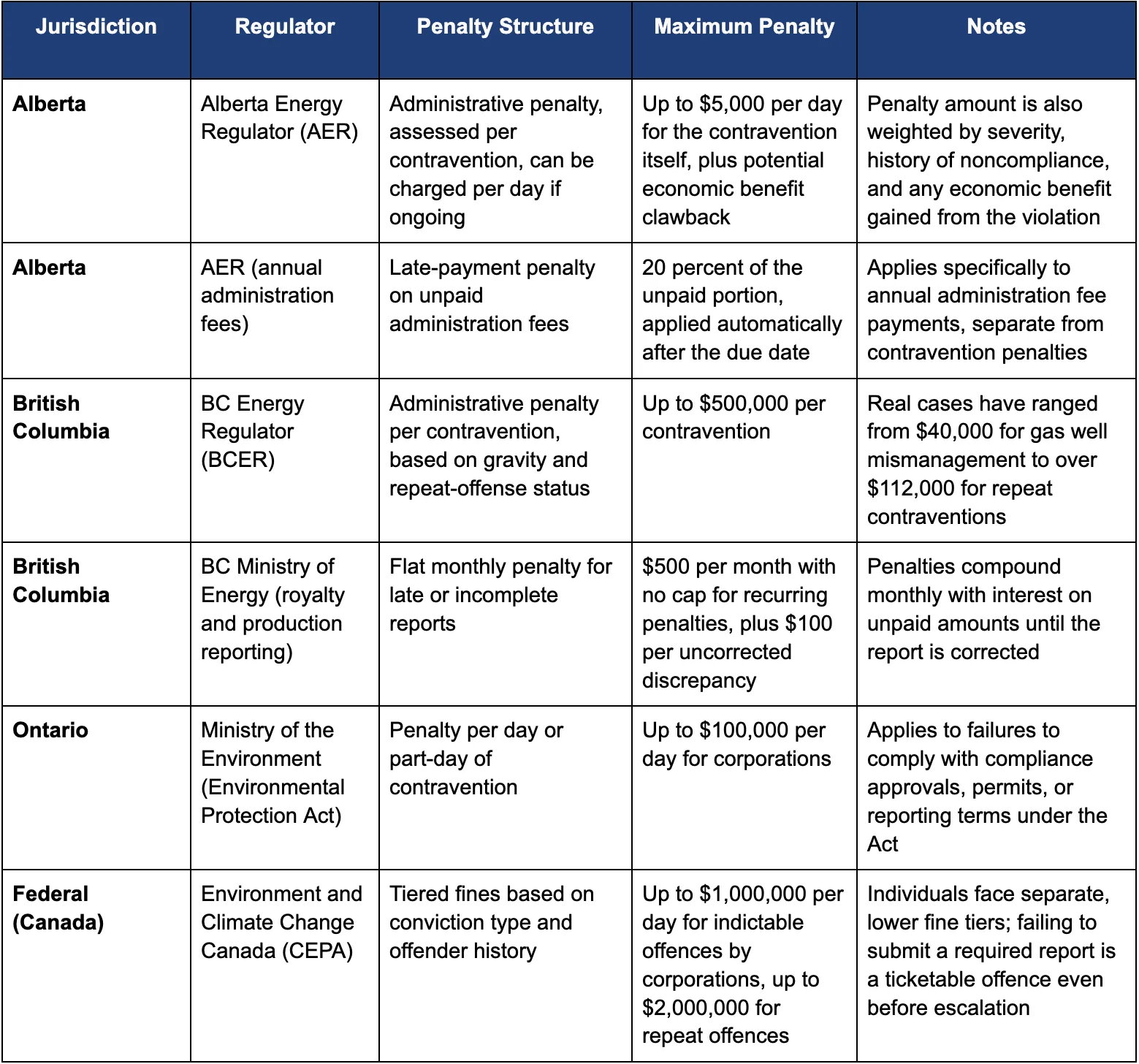
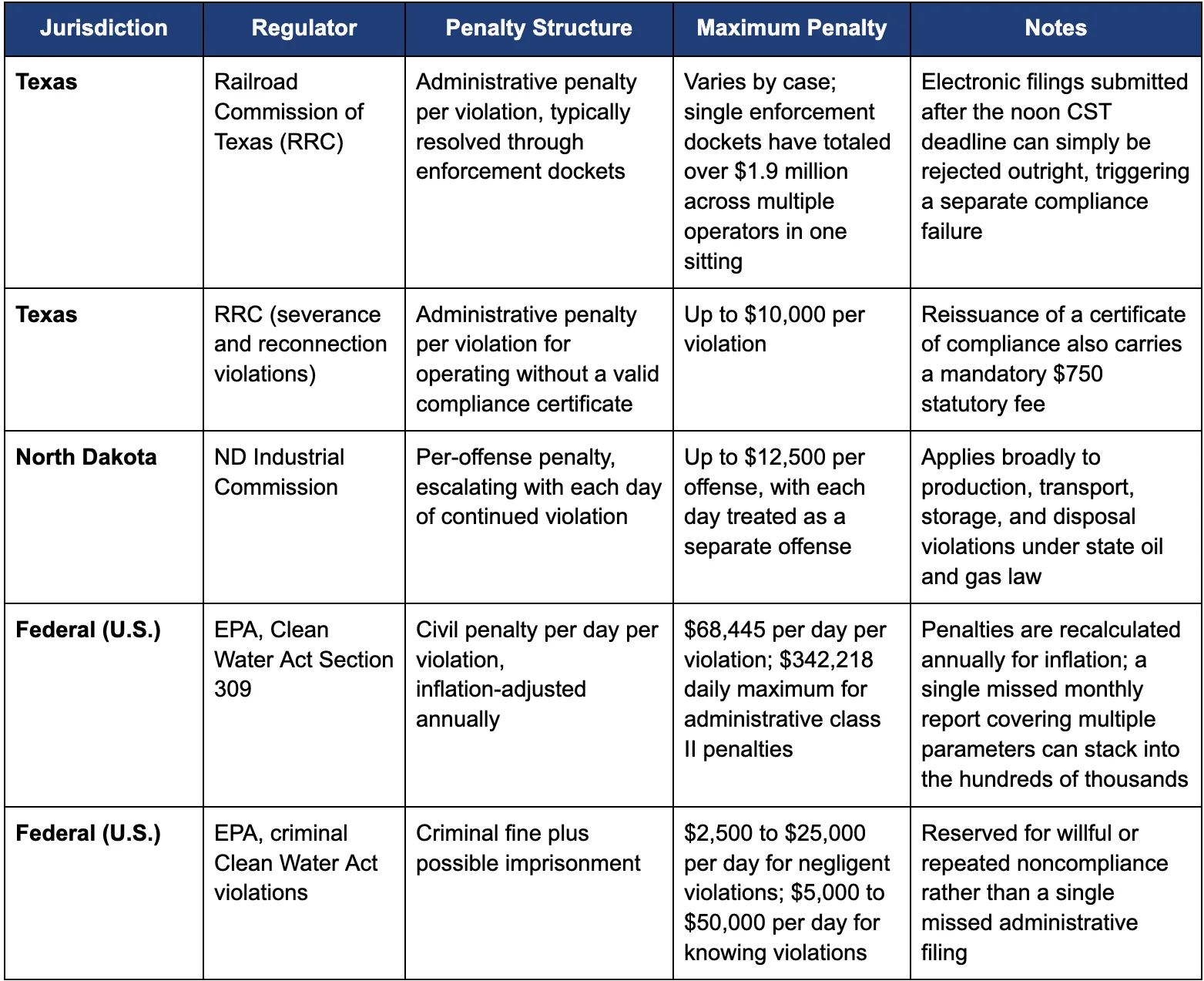
Below is a breakdown of what missed or late environmental and regulatory filings actually cost across the jurisdictions most active in oil and gas and environmental compliance.
Penalty Structures Across Canada
Penalty Structures Across the United States
What actually drives the size of a penalty
Regulators don't apply maximum penalties by default. Alberta's AER explicitly weighs the seriousness of the contravention, its effect on public safety or the environment, the company's history of noncompliance, and whether the company gained any economic benefit from skipping the filing. A recent AER decision against an Alberta operator illustrates this in practice: the company was fined over $437,000 for three contraventions, driven up specifically because it failed to report a spill as required and did not take remedial action promptly.
The pattern holds across jurisdictions. A late filing alone often carries a modest, almost administrative penalty. A late filing combined with an unreported spill, an unaddressed environmental condition, or a history of prior violations moves into a different penalty tier entirely, sometimes by a factor of ten or more.
Why this matters beyond the fine itself
The dollar figure is rarely the full cost. A missed filing can trigger a compliance review, delay a permit renewal, or affect a company's standing in future regulatory interactions, none of which show up in the penalty line item but all of which cost time and money. In Texas, a rejected electronic filing after the noon CST deadline doesn't just delay the record, it can trigger the exact enforcement process that regularly produces multimillion-dollar enforcement dockets.
Getting ahead of jurisdiction-specific deadlines
Every jurisdiction above has its own filing calendar, its own penalty escalation logic, and its own tolerance for lateness. Multi-jurisdiction operators face the added complexity of tracking all of them at once, in formats and cadences that don't align.
If your team is managing filing deadlines across multiple states or provinces manually, the risk isn't just one missed report. It's the version of this table your operation would generate if every jurisdiction's deadlines were tracked in one place instead of several.
Never Miss Another Filing Deadline Again
Matidor's project management platform centralizes regulatory deadlines, filing status, and compliance documentation across every jurisdiction your team operates in, so the deadlines above become dates your team hits, not fines your team explains.
Book a demo to see how a live compliance calendar keeps every filing deadline visible across your entire portfolio.
Start a free 14-day trial and bring your multi-jurisdiction filing deadlines into one system before the next reporting period.
.webp)
.webp)
.webp)
.webp)
.webp)
.webp)
.webp)
.webp)
.webp)

.webp)
.webp)
.webp)
.webp)
.webp)
.webp)
%20(2).webp)
.webp)
.webp)
.webp)

















.webp)

.webp)


.jpg)


%20(1).webp)




.jpg)

.jpg)
.jpg)
.jpg)


.jpg)