
Environmental consulting RFPs rarely say, “Make this project feel safe in our hands.”
But that is what most evaluation criteria are trying to determine.
Clients expect technical expertise. They assume qualified firms understand field investigations, regulatory requirements, environmental data and reporting. Those capabilities may get a proposal shortlisted, but they do not always determine who wins.
The strongest proposals create confidence that the work will be understood, controlled and delivered without unnecessary surprises.
Across environmental services procurement, five patterns reveal what clients are actually looking for.
Relevance Beats Reputation
A long corporate history is not the same as relevant experience.
Clients want evidence that a consultant has handled work resembling the project in front of them. That may mean a similar regulatory environment, site condition, contaminant, stakeholder group, schedule or reporting requirement.
Generic claims about decades of experience place the burden on evaluators to decide whether that experience matters.
Strong proposals make the connection immediately.
They show what the firm encountered, what it was responsible for and what outcome it delivered. They also explain why that experience reduces risk on the proposed assignment.
This is one of the clearest environmental consulting RFP trends: clients are not simply asking whether a firm is capable. They are asking whether it has solved this kind of problem before.
Reputation may open the door. Relevance moves the proposal forward.
The Named Team Matters
Clients are not hiring a logo. They are hiring the people named in the proposal.
That is why environmental RFPs place so much attention on project managers, technical leads, field personnel and specialist support. Clients want to know who will perform the work, how responsibilities will be divided and whether the proposed team will remain available after the contract is awarded.
A résumé proves that someone is qualified. It does not prove that they are the right fit for the assignment.
The strongest proposals explain why each key person belongs on the project. Their experience is connected to a specific responsibility, risk or deliverable rather than presented as a list of credentials.
They also make accountability easy to understand.
Who leads the client relationship? Who reviews technical work? Who coordinates field activities? Who makes decisions when the scope changes? Who steps in if a key person becomes unavailable?
When clients can see how the team will operate, the proposal feels less like a promise and more like a delivery plan.
Methodology Means Control
Methodology sections are often treated as technical writing exercises. Clients read them as risk assessments.
They are looking for evidence that the consultant understands the assignment beyond repeating the scope of work.
A credible methodology connects activities to decisions and deliverables. It shows how fieldwork will be coordinated, how data quality will be protected, how assumptions will be tested and how unexpected conditions will be handled.
It also demonstrates judgment.
Environmental projects rarely proceed exactly as expected. Site access changes. Laboratory results raise new questions. Weather disrupts field schedules. Regulators request additional information. Conditions on the ground challenge the original scope.
A generic methodology assumes the project will follow the plan.
A strong methodology shows that the team can maintain control when it does not.
That distinction matters because clients are not only evaluating whether the technical approach is correct. They are evaluating whether the consultant can protect the schedule, budget and quality of the work when conditions change.
The best methodology does more than describe the process. It makes the project feel manageable.
Visibility Builds Confidence
Clients do not want to wait for the final report to find out how the project is going.
Environmental work often involves multiple sites, field crews, laboratories, subcontractors, GIS specialists, regulators and internal stakeholders. Without a clear flow of information, even technically sound work can feel disorganized.
That is why communication, scheduling and reporting appear so often in environmental services procurement.
Clients want to know:
- What has been completed
- What happens next
- Which decisions are approaching
- Whether the budget remains on track
- Where risks or delays are emerging
- Who is responsible for the next action
This visibility is not administrative overhead. It is part of the service being purchased.
A consultant may produce excellent technical work, but if the client has to chase for updates, reconcile conflicting spreadsheets or request the same information repeatedly, confidence falls.
Winning environmental consulting proposals describe how project visibility will be maintained from the beginning. They show how field updates, schedule changes, costs, documents and decisions will remain connected throughout delivery.
The final report matters. So does everything the client experiences before receiving it.
Price Must Feel Predictable
Clients care about price, but the lowest fee does not always create the greatest confidence.
A number without context can introduce more uncertainty than reassurance.
Clients want to understand what is included, how effort has been allocated and which assumptions could affect the final cost. They want to see that the fee reflects the proposed methodology rather than a generic estimate or an attempt to win on price alone.
A strong commercial section connects cost to scope.
It makes deliverables, staffing, subcontractor expenses and optional work easy to understand. It also identifies the conditions that could require a change in budget.
This does not mean adding pages of qualifications and exclusions. It means making the financial logic visible.
Predictability is especially important when field conditions are uncertain. Clients know that environmental projects can change. What they want is confidence that changes will be identified early, explained clearly and managed responsibly.
The best price is not always the lowest. It is the one the client can understand and defend.
The Proposal Previews Delivery
A proposal is the client’s first experience of how the consultant works.
If it is generic, difficult to navigate or inconsistent with the RFP, the client may expect the same from project delivery.
If it is clear, specific and well organized, it creates a different expectation.
A focused proposal signals focused communication.
A relevant project example signals practical experience.
A credible methodology signals control.
A defined team signals accountability.
A transparent fee signals fewer commercial surprises.
This is what clients want from environmental consultants: evidence that the firm can reduce uncertainty, not simply complete a scope of work.
For business development and proposal teams, that changes the job. The goal is not to include every available qualification. It is to make the decision easier.
The proposal should leave the evaluator with a clear understanding of three things: this team understands the assignment, this team can manage the risks and this team will be easy to work with.
Winning Is Only the Start
The promises made in a proposal eventually become expectations for the delivery team.
If the proposal promises timely updates, clients will expect visibility. If it promises cost control, they will expect current budget information. If it promises coordinated fieldwork, they will expect project records, locations and responsibilities to remain connected.
That is where operational systems matter.
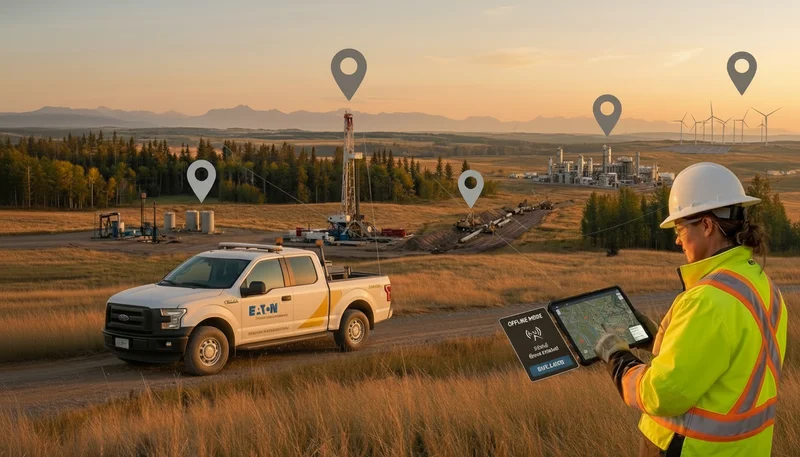
Matidor gives environmental teams a shared, map-based workspace for project locations, field information, tasks, documents and budget visibility. It helps firms carry the clarity promised in the proposal into the day-to-day client experience.
Winning environmental work is not only about writing the strongest response. It is about delivering the project as confidently as the proposal describes it.
Book a demo to see how Matidor helps environmental consulting teams coordinate fieldwork, project information and client visibility in one place.
Ready to explore it yourself? Start a free 14-day trial and see how your team can manage environmental projects from one shared, map-based workspace.
.webp)
.webp)
.webp)
.webp)
.webp)
.webp)

.webp)
.webp)
.webp)
.webp)
.webp)
.webp)
%20(2).webp)
.webp)
.webp)
.webp)











.webp)

.webp)

.jpg)


%20(1).webp)




.jpg)

.jpg)
.jpg)
.jpg)

.jpg)